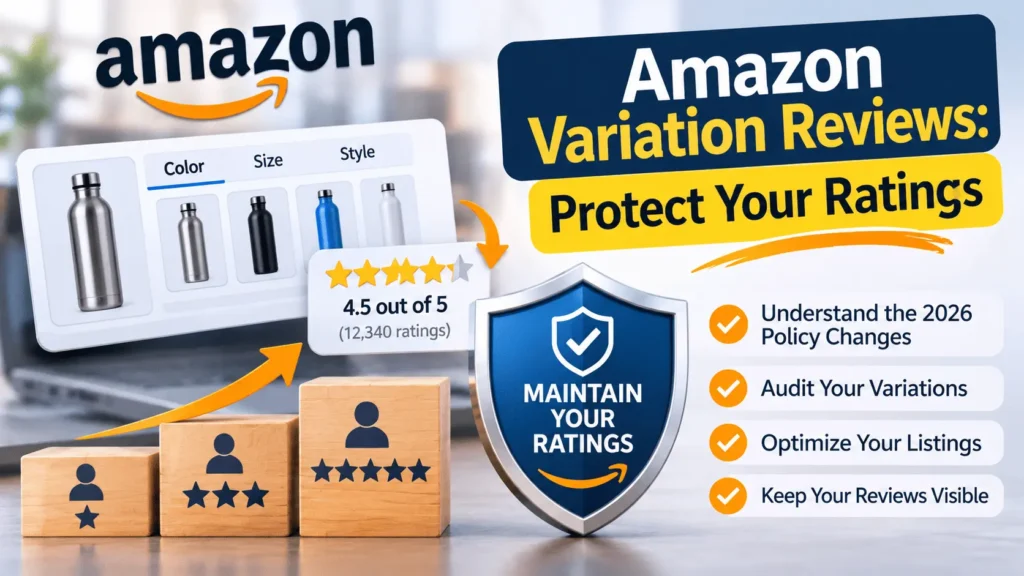



A parent listing can look healthy while one child ASIN quietly loses the review count that helped shoppers trust it. That can happen when a variation family combines products that are related in the catalog but meaningfully different in function, features, or specifications.
Amazon changed how reviews are shared across product variations beginning February 12, 2026. The rollout was phased by product category through May 31, 2026. As of late 2026, this is not a change sellers should wait to prepare for. It is a catalog and conversion issue to audit now.
The rule is straightforward in principle: reviews can be shared when variations differ only in minor ways that do not affect core functionality. When products have significant differences, reviews are no longer shared across those variations. The result can be a different rating and review count on individual child ASINs.
| FIRST, DO NOT TRY TO MERGE REVIEWS BY CHANGING LABELS: A valid variation relationship must reflect the product shoppers are actually buying. Misusing a variation theme to make unrelated or functionally different products share reviews can create a catalog-policy problem, not a durable recovery. |
What changed in Amazon review sharing?
Before the update, reviews could appear across a wider set of children in the same variation family, including products with substantial differences. Amazon said that could show shoppers feedback that did not accurately describe the variation they were considering. The new approach narrows sharing to products with minor differences that do not change functionality.
Amazon identified several variation types that can continue sharing reviews when the products remain the same underlying product:
| Variation type | Example Amazon gives | What to check |
|---|---|---|
| Color or pattern | The same product in different colors or patterns. | The product itself and function remain the same. |
| Same-function size | King- and queen-size bedding. | The size changes, but the product serves the same purpose. |
| Pack size or quantity | Different quantities of the same product. | The pack count changes, not the underlying item or function. |
| Secondary scent | Lemon-scented and unscented versions of a cleaning product where scent is not the product’s main purpose. | The scent is secondary, not the defining product function. |
| Model fitment | Cases for different phone models, within the same product type. | The products remain the same type; fitment is the variation. |
These are examples, not a shortcut for every catalog. Amazon’s category-specific variation themes still matter. A seller should not assume that any difference in flavor, material, capacity, formulation, compatibility, or feature set is automatically eligible. Use the category rules and Amazon’s review-sharing eligibility tools for the specific products.
Why can a child ASIN lose ratings or review count?
Imagine one parent ASIN that groups a basic lamp, a smart lamp with app control, and a rechargeable lamp with a battery. A shopper looking at the basic version may see reviews written by customers who bought a different product with different controls or performance. Under the updated policy, Amazon may stop sharing those reviews across products with significant functional differences.
That does not automatically mean Amazon deleted every review. It means reviews may no longer be displayed across ineligible child ASINs. A child page can therefore show a smaller rating count and a different average rating after the review-sharing rules apply. The effect is most visible on children that previously relied on reviews generated by other variants.
How to audit your parent-child variation families
Start with the catalog structure, not with the review count. If the relationship is not valid, trying to recover the old shared rating is the wrong objective. The goal is a variation family that accurately represents the products and gives shoppers clear, product-specific information.
- 1. Build a child-ASIN inventory. Export or record every parent ASIN, child ASIN, SKU, product type, variation theme, attribute value, current rating count, star rating, sessions, and conversion rate. Capture a baseline before editing anything.
- 2. Compare the products side by side. Ask whether each child performs the same core job and differs only by an eligible attribute. If one child adds a new function, a different technology, a materially different component, or a distinct product purpose, it may belong in a separate listing.
- 3. Check the variation theme. The theme should describe the real difference. A color difference should use a color theme; a quantity difference should use a pack-size or quantity theme when that theme is available and appropriate. Do not use an unrelated theme simply because it produces a larger shared review pool.
- 4. Review Amazon’s catalog guidance. Check Manage All Inventory, the category’s variation relationship rules, and the Review Sharing Guidelines. Amazon also recommends using Seller Assistant to check whether product variations are eligible for review sharing where that feature is available.
- 5. Save the change history. Record the original relationship, the reason for any correction, the date of the edit, and the resulting rating count. This makes it easier to distinguish a policy-driven display change from a listing error or an unrelated performance shift.
What to do if the variation theme is wrong
Amazon has stated that if sellers update a variation theme after the change takes effect, reviews will be re-shared for products that are eligible. That is useful when the original catalog used the wrong theme to describe a genuine difference. For example, if two versions differ by color but were incorrectly grouped under quantity, correcting the theme may allow eligible sharing to resume.
Do not make a cosmetic edit to manufacture eligibility. If two products have different functionality, the catalog should say so. A short-term increase in visible reviews is not worth a suppressed listing, broken parent-child relationship, or future customer confusion.
How to protect conversion when reviews split
If a child ASIN now has fewer reviews, treat its detail page as a product page that needs to earn trust on its own. Start with the information that can reduce uncertainty before the shopper reaches the review section.
- Rewrite child-specific bullets so that they explain what is different about that exact version. Avoid generic bullets that describe features the child does not have.
- Use images and A+ Content to show the relevant dimensions, compatibility, included components, setup steps, and use cases. Make differences visible rather than forcing shoppers to infer them.
- Check the variation selector and child titles. The selected option should be obvious, and the image should match the child ASIN the customer has chosen.
- Review Voice of the Customer, return reasons, and customer questions for each child. A review split can expose a product issue that was previously masked by feedback from other variants.
- Use Amazon’s approved Request a Review process and, where eligible, Amazon Vine. Never offer incentives, ask only satisfied buyers, or condition a benefit on a positive review.
After the catalog is corrected, compare child-level sessions, unit session percentage, ad conversion, returns, and customer questions over a meaningful period. A lower rating count does not tell you by itself whether the product page is converting worse; use the sales and customer-experience data to see what actually changed.
This is where listing content and catalog structure need to work together. Alpha Spikes’ Amazon Listing Optimization service can help audit child pages, align copy and imagery with each product, and improve the information shoppers use to choose a variation. For search discovery, see Alpha Spikes’ Amazon SEO service.
A practical variation-review recovery checklist
| Check | Pass condition |
|---|---|
| Product relationship | All children serve the same core purpose and are valid variations for the category. |
| Variation theme | The selected theme describes the actual attribute that changes. |
| Child content | Title, images, bullets, and A+ Content accurately represent each child. |
| Review display | Review count and rating are checked per child ASIN, not only at parent level. |
| Customer experience | Returns, Voice of the Customer, and questions are reviewed by child ASIN. |
| Review generation | Only Amazon-compliant review tools and programs are used. |
Frequently asked questions
When did Amazon change review sharing across variations?
The change began on February 12, 2026 and was rolled out by product category through May 31, 2026. Amazon said sellers would receive an email notification 30 days before the change affected their products.
Do color variations still share reviews?
Amazon says color or pattern variations of the same product can continue sharing reviews, provided the products remain the same underlying item and meet the applicable variation rules.
Do all size variations share reviews?
Not automatically. Amazon’s example is size variations that maintain the same function, such as king- and queen-size bedding. The category theme and product relationship still need to be valid.
Can I get reviews shared again after correcting a variation theme?
Amazon says reviews will be re-shared for eligible products when sellers update variation themes after the change takes effect. Correct the catalog relationship only when the updated theme accurately describes the real difference.
Should I split every child ASIN that loses reviews?
No. Review sharing eligibility and the validity of the parent-child relationship are separate questions. Keep legitimate variation families together; separate products only when Amazon’s variation rules or the products’ actual differences require it.
Make every child ASIN earn the right review
Amazon’s updated policy is designed to make product feedback more relevant to the item a shopper is considering. Sellers can protect their ratings and conversion by auditing the catalog, correcting inaccurate variation themes, and giving every child ASIN a page that clearly explains the product.
If review counts have changed across a large catalog, Alpha Spikes can help review the listing structure and product content so that the variation family reflects the products customers actually receive.