Definition
Amazon SEO is the process of optimizing product listings, keywords, content, and sales signals to improve visibility and ranking within Amazon search results.
TL;DR
Improving Amazon SEO means helping Amazon understand your product, match it with relevant customer searches, and rank it higher in search results. Sellers improve rankings by researching buyer-focused keywords, optimizing product listings, increasing conversion rates, improving reviews, and using advertising data to support organic growth.
Amazon SEO is different from Google SEO because Amazon’s main goal is helping customers find products they are likely to buy. Sales performance, relevance, customer experience, and conversion signals all influence where products appear.
A successful Amazon SEO strategy follows a clear process:
- Research keywords customers actually search for.
- Optimize titles, bullet points, images, and descriptions.
- Improve conversion rates through better customer experience.
- Track ranking performance and update the listing regularly.
What Is Amazon SEO and Why Does It Matter?
Amazon SEO is the process of improving a product listing so it appears higher in Amazon’s search results for relevant customer searches.
When a shopper searches for a product on Amazon, the platform’s search algorithm analyzes thousands of product listings and decides which products should appear first. The algorithm considers factors such as keyword relevance, sales history, conversion rate, customer reviews, and pricing. For sellers, better Amazon SEO means more visibility without paying for every click. A product that ranks organically can receive consistent traffic from shoppers who already have purchase intent.
Amazon SEO matters because most customers discover products through Amazon’s internal search. If your product does not appear on the first page, fewer shoppers will see it, compare it, or purchase it.
How Does Amazon’s Search Algorithm Rank Products?
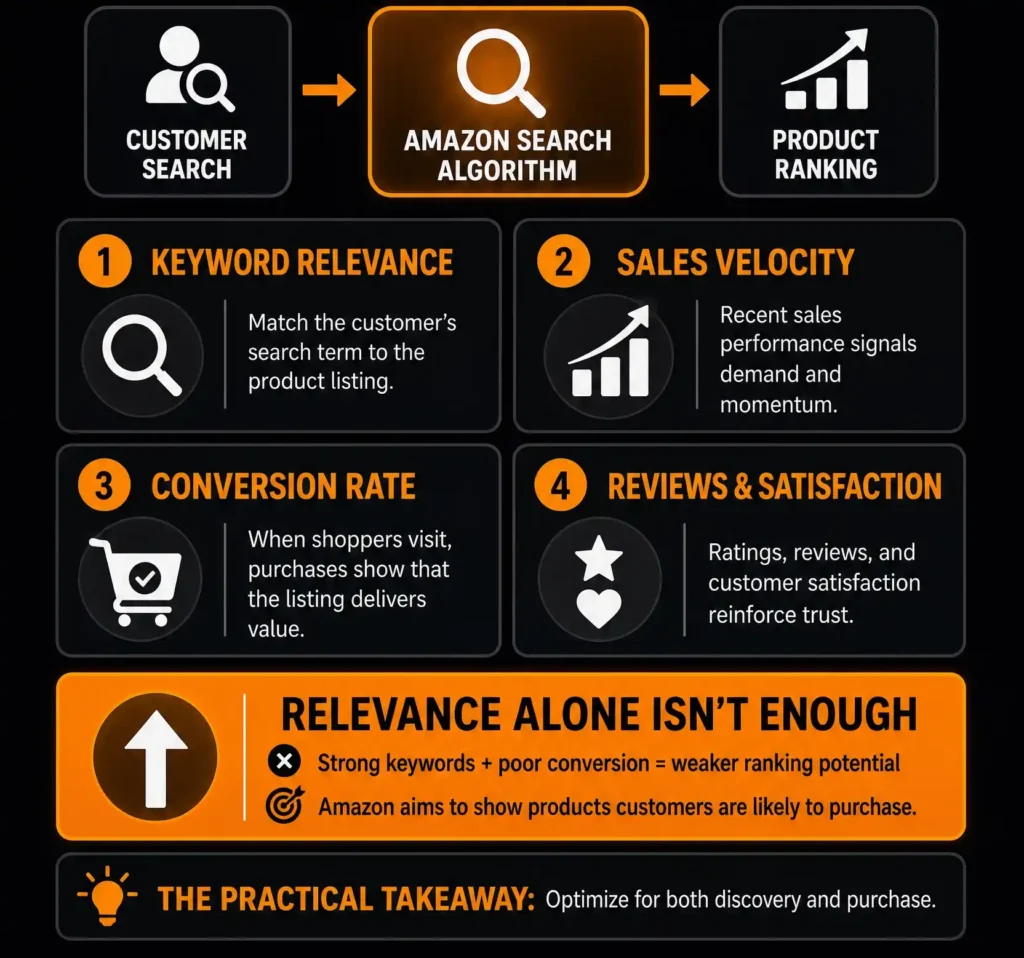
Amazon ranks products based on how relevant and valuable they are for customers. The Amazon search algorithm connects customer search terms with product information and sales performance.
Amazon’s ranking system is often associated with the A9 and A10 algorithm updates. While Amazon does not publicly reveal the complete formula, sellers commonly identify several ranking signals.
The main factors that influence Amazon rankings include:
- Keyword relevance between the search term and product listing.
- Sales performance and recent sales velocity.
- Product conversion rate after customers visit the listing.
- Customer reviews, ratings, and satisfaction signals.
A product with strong keyword relevance but poor conversion may struggle because Amazon wants to show products that customers are likely to purchase.
How Can Keyword Research Improve Amazon SEO?
Keyword research helps Amazon sellers discover the exact words customers use when searching for products. The right keywords improve product visibility because Amazon can better understand what the product offers.
Amazon keyword research should focus on buyer intent rather than only search volume. A keyword with fewer searches but stronger purchase intent can generate more sales than a broad keyword with high competition.
Useful keyword sources include:
- Amazon search suggestions.
- Competitor product listings.
- Helium 10 keyword research tools.
- Jungle Scout keyword databases.
A strong keyword strategy usually includes:
- Primary keywords with high relevance.
- Long-tail keywords with specific buyer intent.
- Related search terms customers use during research.
- Backend search terms that support indexing.
How Do You Optimize an Amazon Product Listing?
Amazon listing optimization improves how customers and Amazon understand your product. A well-optimized listing combines keywords with clear information that helps shoppers make buying decisions.
How Should You Optimize an Amazon Product Title?
The Amazon product title is one of the strongest areas for keyword placement. A good title explains what the product is, its main benefit, and important features.
A strong Amazon title usually includes:
- Main product keyword.
- Brand name.
- Important product features.
- Size, quantity, or variation details.
How Should You Write Amazon Bullet Points?
Amazon bullet points explain product benefits and answer common buyer questions. They should focus on customer problems rather than simply listing features.
Effective bullet points explain:
- What problem the product solves.
- Why should the customer choose it.
- How the product works.
- Important specifications.
How Do Product Images Affect Amazon SEO?

conversion rate. When shoppers compare multiple products, images often determine which listing receives attention.
Amazon allows sellers to add multiple images, including:
- Main product image.
- Lifestyle images.
- Feature comparison graphics.
- Size and measurement images.
A customer who understands the product quickly is more likely to purchase. Higher conversions send positive signals to Amazon’s ranking system.
How Do Reviews and Ratings Improve Amazon Rankings?
Reviews and ratings influence Amazon SEO because they affect customer trust and purchasing decisions.
Products with strong ratings often achieve better conversion rates because shoppers feel more confident purchasing them.
Sellers can improve review performance by:
- Providing accurate product descriptions.
- Delivering reliable customer service.
- Following Amazon review guidelines.
- Improving product quality based on feedback.
A product with hundreds of positive reviews generally has an advantage over a similar product with limited customer feedback because buyers and Amazon both recognize stronger customer satisfaction signals.
How Can Amazon PPC Help Improve SEO?
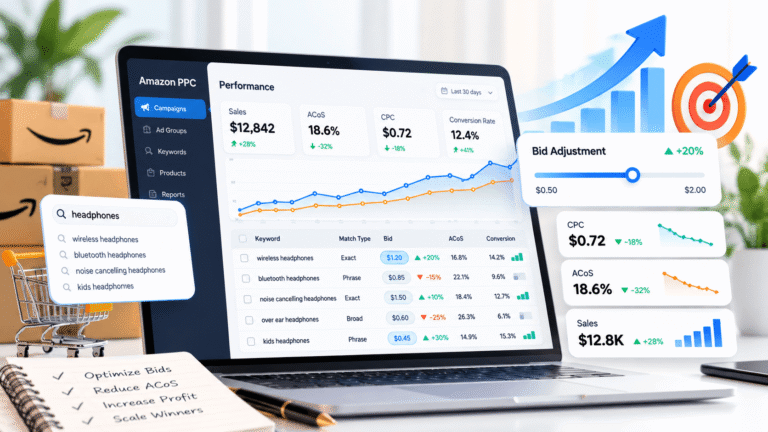
Amazon PPC (Pay-Per-Click advertising) can support SEO by generating sales data, improving visibility, and discovering valuable keywords.
A common Amazon PPC and SEO process is:
- Launch targeted PPC campaigns.
- Identify keywords that generate sales.
- Add successful keywords into listing content.
- Improve organic rankings over time.
PPC does not directly replace SEO, but it can provide useful data and help new products gain initial visibility.
How Can Competitor Analysis Improve Amazon SEO?

Competitor analysis helps sellers understand what successful products are doing differently. By studying competitors, sellers can discover keyword opportunities, content gaps, and customer expectations.
A competitor SEO analysis should review:
- Product titles and keyword placement.
- Bullet point structure.
- Image quality and content.
- Customer reviews and complaints.
Customer reviews are especially valuable because they reveal what buyers like, dislike, and expect. Sellers can use this information to improve their own listings.
What Amazon SEO Mistakes Should Sellers Avoid?
Many sellers struggle with Amazon SEO because they focus only on keywords and ignore customer experience.
Common mistakes include:
- Adding irrelevant keywords that attract the wrong shoppers.
- Writing unclear product descriptions.
- Using low-quality images.
- Ignoring customer reviews and feedback.
Keyword stuffing can hurt performance because Amazon wants accurate product information, not a list of unrelated search terms.
How Do You Track Amazon SEO Performance?
Amazon SEO requires ongoing monitoring because rankings, competition, and customer behaviour change over time.
Important metrics to track include:
- Keyword ranking positions.
- Organic sales growth.
- Conversion rate.
- Advertising performance.
- Customer review trends.
Tools such as Helium 10, Jungle Scout, and Amazon Brand Analytics help sellers measure keyword performance and identify improvement opportunities.
FAQs
What is the fastest way to improve Amazon SEO?
The fastest way to improve Amazon SEO is to optimize the product listing with relevant keywords, better images, and stronger customer-focused content. Sellers should also improve conversion rates because Amazon rewards listings that generate sales from customer searches.
How long does Amazon SEO take to show results?
Amazon SEO results usually appear gradually over several weeks or months. New products may need time to build sales history, reviews, and ranking signals before achieving stronger organic positions.
Does Amazon PPC improve organic ranking?
Amazon PPC can support organic ranking by generating sales and identifying profitable keywords. However, advertising alone does not guarantee higher organic rankings because Amazon also evaluates relevance, conversion, and customer satisfaction.
How many keywords should an Amazon listing contain?
An Amazon listing should include all relevant keywords naturally across the title, bullet points, description, and backend search terms. The goal is keyword relevance, not adding as many keywords as possible.
Why is my Amazon product not ranking?
Products often fail to rank because of weak keyword targeting, low conversion rates, limited sales history, poor images, or insufficient customer reviews. Improving listing quality and customer response can help increase ranking performance.
Are Amazon backend keywords still important?
Yes, backend keywords help Amazon understand additional search terms connected with a product. They allow sellers to include relevant keywords that do not fit naturally into visible listing content.
Conclusion
Amazon SEO is not a single adjustment; it is an ongoing process that combines keyword research, listing optimization, customer experience, and performance tracking.
The strongest sellers treat Amazon SEO as a complete growth system. They understand what customers search for, create listings that answer buyer questions, monitor ranking changes, and improve based on real data.
Start by auditing your current product listing, identifying keyword gaps, improving your content quality, and tracking results. With consistent optimization, Amazon SEO can help your products gain more visibility, attract qualified shoppers, and create long-term organic growth.