Amazon PPC (Pay-Per-Click) is Amazon’s advertising system where sellers pay only when shoppers click their sponsored product ads, helping products gain visibility, sales, and ranking momentum inside Amazon’s marketplace.
Amazon PPC is a paid advertising model that allows sellers and brands to promote products inside Amazon search results and product pages. Instead of paying for every impression, advertisers pay only when a shopper clicks their ad.
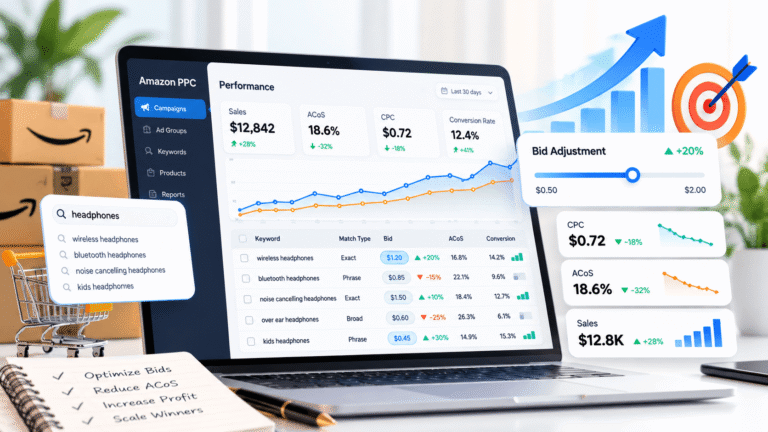
Amazon PPC works through an auction system. Sellers choose keywords, products, audiences, and bids, then Amazon decides which ads appear based on factors like bid amount, product relevance, listing quality, and past performance.
In 2026, Amazon PPC is no longer only about finding keywords and increasing bids. Successful campaigns depend on matching shopper intent, improving product pages, creating better visuals, and turning paid traffic into organic ranking growth.
Amazon PPC is Amazon’s internal advertising platform that helps sellers promote products through sponsored placements. PPC stands for Pay-Per-Click, meaning advertisers are charged only when someone clicks their advertisement.
This creates a challenge for new sellers:
This is often called the Amazon “chicken and egg” problem. Advertising gives products initial exposure, while sales data from PPC can help build stronger organic performance over time.
Amazon PPC works through a real-time advertising auction. Every time a shopper searches on Amazon, multiple sellers may compete for an advertising position.
Amazon evaluates several factors before showing an ad:
The highest bidder does not always win. Amazon wants shoppers to find products they are likely to buy, so relevance and conversion performance influence ad placement.
Amazon uses an auction-based advertising model where advertisers compete for visibility.
A simplified calculation used by many Amazon PPC specialists is:
Target CPC = Average Order Value × Conversion Rate × Target ACoS
Amazon offers several advertising formats designed for different business goals. Each format reaches shoppers at different stages of the buying journey.
Sponsored Products are individual product advertisements that appear in Amazon search results and product detail pages. They are the most common starting point for sellers because they directly promote a specific ASIN (Amazon Standard Identification Number).
Most beginners should start here because the connection between advertising and sales is easier to measure.
Sponsored Brands allow sellers with registered brands to promote multiple products through a single advertisement. These ads typically feature a brand logo, custom headline, several products, and a connection to the brand’s Amazon Store. They are designed for businesses that want to increase brand awareness, showcase their product range, and attract shoppers beyond promoting just one product.
Sponsored Display ads use audience-based targeting to reach shoppers beyond traditional keyword searches. These ads can target customers based on product views, shopping behavior, interests, and previous interactions with a brand or product. They help sellers reconnect with shoppers who have viewed their products but did not complete a purchase, encouraging them to return and consider buying.
Amazon DSP (Demand-Side Platform) allows advertisers to buy display, video, and audio advertising both on and off Amazon.
Unlike traditional PPC campaigns focused mainly on search results, DSP supports full-funnel advertising by reaching shoppers before they search.
Aspect | Amazon PPC | Amazon SEO |
Main Purpose | Provides paid visibility by placing sponsored ads in front of shoppers. | Improves organic ranking so products appear naturally in Amazon search results. |
How It Works | Sellers pay when shoppers click their advertisements. | Sellers optimize listings, keywords, sales history, and customer signals to improve rankings. |
Main Benefit | Generates immediate traffic, clicks, and sales opportunities. | Builds long-term organic visibility and reduces dependence on paid traffic. |
Best For | New product launches, increasing visibility, and discovering profitable keywords. | Building sustainable growth and maintaining higher search positions. |
Challenge Without It | Relying only on PPC can increase advertising costs without creating long-term organic growth. | New products may struggle because they lack sales history and ranking signals. |
Growth Process | PPC → More Visibility → More Clicks → More Sales → Stronger Ranking Signals | SEO → Better Organic Ranking → More Free Traffic → More Sales → Stronger Marketplace Authority |
Best Strategy | Combine PPC data with SEO improvements to create a PPC and SEO growth flywheel. | Use PPC insights to improve keywords, listings, and organic performance. |
Amazon PPC performance depends on understanding the right numbers. Looking only at sales can hide problems.
ACoS means Advertising Cost of Sale.
Formula:
ACoS = Advertising Spend ÷ Advertising Revenue × 100
TACoS means Total Advertising Cost of Sale.
Unlike ACoS, TACoS measures advertising spend against total product revenue, including organic sales.
Formula:
TACoS = Advertising Spend ÷ Total Revenue × 100
Low CTR usually means the product image, title, or targeting needs improvement. Low conversion rate often points toward listing problems, pricing issues, reviews, or weak product positioning.
Important campaign metrics include:
A beginner should not launch dozens of campaigns without a clear structure.
A simple starting process looks like this:
Amazon PPC requires data before major decisions. New campaigns often show higher ACoS during the first few weeks because Amazon is learning which shoppers respond to the product.
Amazon provides three main keyword targeting options.
Broad match gives Amazon more freedom to show ads for related searches.
Example:
Keyword:
“coffee maker”
Possible searches:
Broad match helps discover new opportunities.
Phrase match keeps the keyword order but allows additional words before or after it.
Example:
Keyword:
“coffee maker”
Search:
“best coffee maker for office”
Exact match gives the highest control.
Example:
Keyword:
“stainless steel coffee maker”
Ad mainly appears for that specific search.
Amazon PPC has moved from a keyword-only system toward an intent-based advertising model. A product does not win only because it has the highest bid. The product page, images, videos, and conversion ability influence advertising success.
Amazon has also expanded AI-driven shopping experiences. Sponsored Products and Sponsored Brands prompts now allow AI-powered conversational interactions inside shopping experiences, helping shoppers ask questions and receive product information.
Amazon PPC costs vary by category, competition, and keyword demand.
Common cost ranges include:
The right budget depends on goals.
A launch campaign may prioritize visibility and data collection.
A mature product campaign may prioritize profit and lower advertising costs
Amazon PPC is worth it when sellers treat it as a growth system instead of a simple sales button.
PPC may fail when sellers advertise weak listings with poor images, unclear descriptions, or pricing problems.
Advertising can bring visitors, but the product page must convince shoppers to buy.
Amazon PPC is a paid advertising system where sellers promote products inside Amazon and pay only when shoppers click their ads. It helps products gain visibility, collect sales data, and compete for important search positions.
Amazon PPC works through an auction where sellers bid for ad placements. Amazon considers bid amount, product relevance, listing quality, and expected shopper response before deciding which ads appear.
Yes, Amazon PPC is often useful for new products because it creates initial visibility and sales momentum. New listings usually need advertising because they lack the organic ranking history needed to compete naturally.
A good ACoS depends on profit margins and business goals. Many US seller accounts target around 28% to 32%, while stronger-performing accounts may achieve lower ACoS through better targeting and optimization.
Amazon PPC can support organic ranking by generating sales velocity and customer engagement. PPC does not directly replace SEO, but successful advertising can create signals that help products gain stronger marketplace visibility.
Amazon PPC usually requires several weeks of testing before sellers can make reliable decisions. New campaigns often need 2 to 4 weeks to collect enough performance data.
Amazon PPC has changed from simple keyword advertising into a complete product discovery system. Sellers who succeed in 2026 focus on shopper intent, strong listings, smart bidding, and the connection between paid advertising and organic growth.
Amazon PPC is not a shortcut to instant success. It is a feedback system that helps sellers understand customers, improve visibility, and build stronger long-term marketplace performance.