Years ago, it was pretty easy for most brands to be successful on Amazon in just a few clicks with a good listing, a few PPC campaigns, and simple account management. It’s not the way it works these days.
Amazon has come a long way in becoming more competitive, more functional, and more data-driven in 2026 than in the past. The cost of advertising continues to rise, the systems for ranking continue to change, and even an innocent mistake in operations can have an impact on the visibility of ads. In time, many brands come to understand that they are spending too much time fixing their accounts rather than building their business.
One of the primary reasons companies have begun to choose an Amazon Agency over in-house representatives.
TL; DR: Amazon Agency
- Amazon is harder to manage in 2026.
- Ad costs, competition, and account issues have increased.
- An Amazon agency helps with ads, listings, SEO, reporting, inventory, and operations.
- Full-service agencies connect PPC, content, catalog, and account health.
- Growing brands hire agencies when internal teams get overwhelmed.
- Agencies are often better than hiring many separate specialists.
- Small sellers may not need one yet, but scaling brands often do.
Why Amazon Feels Different in 2026
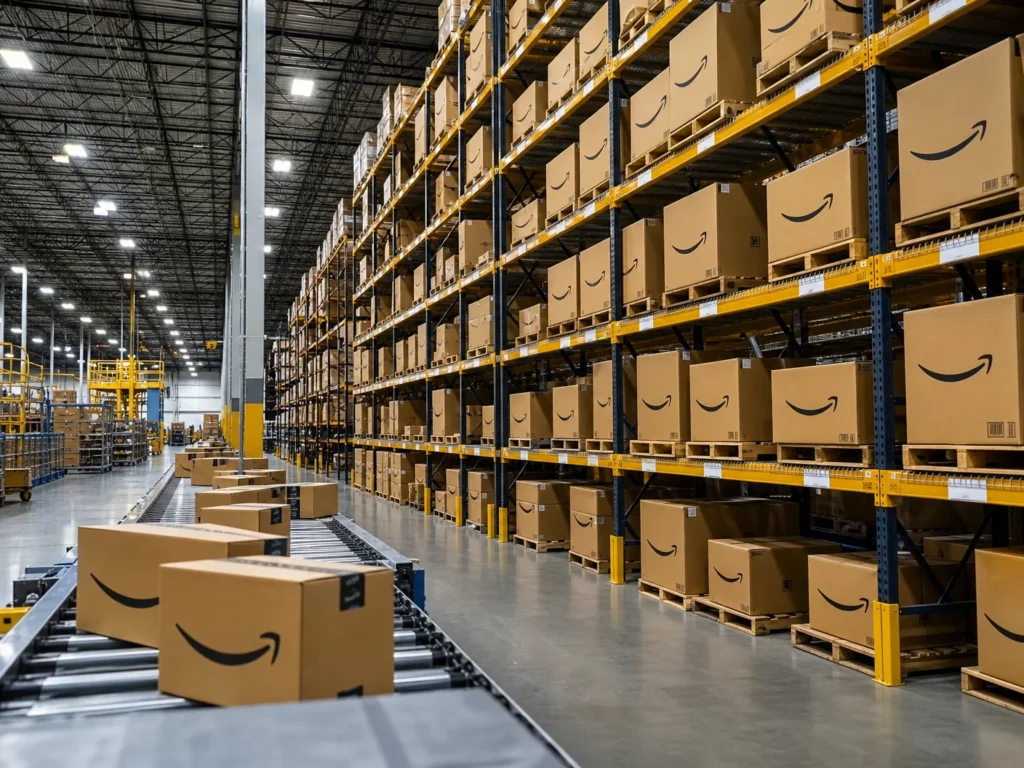
Amazon used to be easier to deal with a few years ago. Brands were able to rank products that were short on keyword optimization, but had some decent images and regular ad spend. Competition remained, but it was not as difficult to remain visible without having to constantly adjust strategy.
It’s a lot different these days.
By 2026, Amazon is more of a flux of constantly changing ecosystems than a typical marketplace. Organic rankings are speeding up, category competition has increased greatly, and advertising has become more aggressive. The product is no longer competing just with similar brands in the country. Brands are competing on a worldwide stage in many categories.
Meanwhile, the performance of operations impacts visibility more in ways than most companies realize. Inventory gaps, delayed shipments, listing suppression issues, and poor conversion rates can quietly reduce momentum even when advertising is still running properly.
This is usually where brands begin noticing the gap between basic account management and actual growth strategy.
Many companies start to think that the issue is advertising. In fact, it’s usually more complex than that. These weak listings, catalog structure, inconsistent operations or forecasting inaccuracies can all impact performance long before the brand realizes there is a clear fall in sales.
One of the major factors making Amazon agencies more important for the past few years is this increasing complexity.
What Does an Amazon Agency Actually Do?
There are many misconceptions, such as the Amazon agency only deals with advertising.
While this was certainly the case years ago, PPC campaigns are just the beginning of the way Amazon is managed today. Today, nearly every aspect of an Amazon account touches another aspect.
For example, weak product pages reduce conversion rates. Lower conversion rates increase advertising costs. Inventory issues can hurt rankings. Late shipments, chargebacks, and other operational issues may impact account health.
Given that many agencies now work with multiple areas rather than one service alone.
Different Types of Amazon Agencies
Not every Amazon agency works the same way.
Some agencies are heavily focused on advertising, while others are built around operations, creative work, or full account management. That difference matters more in 2026 because Amazon performance now depends on several systems working together at the same time.
One of the most common models is the PPC-focused agency. These agencies mainly handle Sponsored Products, Sponsored Brands, bid optimization, and campaign management. They are usually performance-driven and focused heavily on advertising efficiency. For brands mainly struggling with ad performance, this type of support can help. The problem is that advertising alone rarely fixes deeper account issues.
There are also full-service Amazon agencies that manage several areas together. Along with PPC, they often handle listing optimization, catalog management, reporting, A+ Content, operational support, and strategy. These agencies tend to work more closely with the overall health of the account instead of only focusing on ad campaigns.
Some agencies lean heavily toward creative and branding work. Their focus is usually on improving conversion through better visuals, stronger product pages, enhanced A+ Content, storefront design, and customer experience. This type of support is often useful for brands with decent traffic but weak conversion performance.
Operational-focused agencies are another category many brands overlook initially. These agencies usually work more closely with Vendor Central operations, shipment compliance, inventory coordination, chargeback reduction, ASN accuracy, and account health management.
A lot of brands eventually realize they do not just need “better ads.” They need better coordination between advertising, content, inventory, operations, and reporting. That is usually the point where full-service agencies become much more valuable than isolated service providers.
Common Services Offered by an Amazon Agency
Service Area | What It Usually Covers |
|---|---|
Amazon PPC | Sponsored Products, Sponsored Brands, DSP |
Listing Optimization | Titles, bullet points, SEO keywords |
Creative & A+ Content | Infographics, comparison charts, brand storytelling |
Catalog Management | Variations, flat files, suppression fixes |
Analytics & Reporting | Sales tracking, conversion analysis, and ARA reports |
Operational Support | Inventory planning, compliance, and chargeback handling |
The better agencies understand how these systems influence each other instead of treating them as separate tasks.
Why More Brands Are Hiring Amazon Agencies in 2026

Most brands do not look for an agency immediately.
Usually, it happens after growth starts becoming difficult to manage internally. Sales may plateau, ad spend increases without improving profitability, or operational problems begin repeating more often.
At that stage, internal teams often become reactive instead of strategic. Time gets consumed by fixing listing issues, shipment delays, inventory gaps, and reporting confusion.
A good Amazon agency helps bring structure back into the account.
Brands can concentrate more on product development, expansion, and long-term strategy while the agency focuses more on optimizing day-to-day and operational performance.
There are a number of reasons why brands hire agencies, including:
- Rising advertising costs
- Weak conversion rates
- Poor organic rankings
- Inventory forecasting problems
- Repeated catalog or compliance issues
- Lack of clear reporting and analytics
In 2026, Amazon has become complex enough that many growing brands treat it as a dedicated business unit instead of just another sales channel.
The Point Where Most Internal Teams Get Overwhelmed
A lot of brands do not start with an agency because they expect problems. Most actually begin by trying to manage Amazon internally.
At first, that setup usually works. A smaller catalog is easier to control, ad spend is manageable, and operational tasks are still limited. But once the business starts growing, the workload changes quickly.
Advertising becomes harder to monitor consistently. Inventory forecasting takes more attention. Listing updates start piling up. Reporting becomes scattered across multiple tools and dashboards. Small operational issues begin repeating more often.
This is usually where internal teams start spending more time reacting than planning.
One person may understand PPC well but struggle with catalog management. Another team member might handle operations effectively but have little experience with Amazon SEO or conversion optimization. Over time, the account becomes dependent on disconnected workflows instead of a clear strategy.
The challenge is not always a lack of effort. In many cases, Amazon simply becomes too large and too specialized for a small internal team to manage efficiently across every area at once.
That is one reason experienced agencies often bring immediate stability into growing accounts. Instead of trying to manage everything through one or two overloaded employees, brands gain access to people already familiar with advertising systems, operational workflows, catalog structure, analytics, and account performance management.
For many businesses, the biggest improvement is not just better growth. It is a better organization.
The Hidden Problems That Brands Miss
A lot of Amazon accounts appear healthy on the surface.
Traffic may still be coming in. Ads may still generate sales. Revenue may even look stable month to month.
But underneath, there are often inefficiencies quietly hurting profitability.
Sometimes the issue is poor conversion rates, increasing TACoS. Other times, it’s operational problems like ASN errors or recurring chargebacks that are slowly damaging account performance. In some cases, listings simply are not indexed properly for high-value keywords.
These problems are easy to miss when teams only focus on sales numbers.
Experienced agencies usually look deeper into the relationship between:
- traffic
- conversion
- inventory
- profitability
- operational performance
- account health
That broader analysis is often where long-term growth opportunities are found.
In-House Team vs Amazon Agency
One of the questions that brands often ask is whether they should employ their own staff or go through an Amazon agency.
This typically depends on the company’s resources, growth phase, and the speed at which they require specialized knowledge.
In-House Team | Amazon Agency |
Requires multiple hires | Access to existing specialists |
Higher long-term payroll costs | Lower operational overhead |
Slower to scale | Faster implementation |
Ongoing internal training needed | Already updated on Amazon changes |
Building a strong internal Amazon department often means hiring:
- PPC managers
- SEO specialists
- designers
- catalog managers
- operations staff
- analytics support
For many mid-sized brands, that becomes expensive very quickly.
Agencies already have those systems in place, which is why many companies prefer the flexibility of external support.
What Makes a Good Amazon Agency?
Not every agency operates the same way.
Some focus heavily on PPC. Others mainly provide creative services. A few work more like full-service Amazon growth partners.
The strongest agencies usually share a few important characteristics.
They understand that Amazon’s growth is connected to operational performance. Late delivery, lack of inventory planning, poor listings, and poor advertising consistency have an impact on visibility and profitability.
They also rely heavily on data instead of guesswork.
Good agencies pay close attention to:
- conversion rates
- search term performance
- TACoS trends
- inventory movement
- traffic behavior
- seasonal demand shifts
Clarity is another characteristic that’s crucial.
Amazon generates vast quantities of data, but raw reports are of little value. Brands require transparency about what is happening, why it’s important, and what to do next.
The skill of making things easy is what can make an experienced Amazon agency stand out from ordinary ones.
How AI Is Changing Amazon Agencies

AI has changed how agencies operate, but not in the way many people expected.
A lot of repetitive work is now faster. Keyword clustering, reporting, trend analysis, and listing drafts can all be assisted by AI tools. That improves efficiency and saves time.
But strategy still depends heavily on human judgment.
Amazon performance is affected by:
- pricing changes
- inventory disruptions
- competitor activity
- operational issues
- category trends
- seasonal demand
Those situations still require interpretation and decision-making that automation alone cannot fully handle.
The agencies performing best in 2026 are usually combining AI-assisted workflows with real operational expertise instead of depending completely on automation.
Are Amazon Agencies Worth It?
For very small sellers, maybe not yet.
But once a brand starts scaling, Amazon management becomes much harder to handle casually. Small mistakes become more expensive, especially when advertising spend and operational complexity increase.
A weak listing can increase ad costs. Inventory issues can hurt rankings for weeks. Poor reporting can lead to inaccurate forecasting decisions.
That’s why many growing brands eventually realize the cost of poor management is often higher than the cost of professional support.
A strong Amazon agency helps reduce those inefficiencies while creating more stability across the account.
Final Thoughts
Amazon in 2026 rewards brands that operate consistently.
That consistency now comes from multiple systems working together properly: advertising, SEO, analytics, inventory planning, operations, and conversion optimization.
The best Amazon agencies understand how those systems connect. Instead of chasing short-term spikes, they focus on building sustainable account performance that keeps brands growing over time.
FAQs - Amazon Agency
What does an Amazon agency actually help with?
Most people think it’s only advertising, but it usually goes much further than that. A good Amazon agency typically helps with PPC, listings, SEO, catalog management, reporting, inventory coordination, and operational issues that can affect account performance over time.
Why are more brands hiring Amazon agencies in 2026?
Amazon has become much harder to manage compared to a few years ago. Competition is heavier, ad costs are higher, and even small operational problems can affect visibility. A lot of brands eventually reach a point where internal teams struggle to keep up with everything consistently.
Is an Amazon agency better than building an internal team?
It depends on the size of the business and how fast the brand is growing. Some companies prefer building internally, but that often means hiring multiple specialists across PPC, SEO, operations, analytics, and catalog management. Agencies already have those systems and people in place, which is why many brands choose them instead.
What is the difference between a PPC agency and a full-service Amazon agency?
A PPC-focused agency mainly handles advertising campaigns and bid management. A full-service Amazon agency usually works across several areas together, including listings, operations, reporting, creative assets, SEO, and catalog management. The difference is usually in how much of the account they actually manage.
Can operational issues really affect Amazon growth?
Yes, much more than many brands expect. Problems like delayed shipments, inventory gaps, ASN errors, or listing suppression can quietly reduce account performance even if advertising is still running properly. A lot of visibility issues actually start from operational gaps rather than the ads themselves.
Are Amazon agencies worth it for smaller brands?
Not always in the beginning. Smaller sellers sometimes manage perfectly fine internally at first. But once catalogs grow, advertising becomes more expensive, and operations get more complicated, many brands realize professional support saves both time and costly mistakes.